Micro-LED Production - Page 2

AUO confirms it supplies the microLED display for Garmin, but a question arises about the power consumption of the microLED

Yesterday Garmin launched its Fenix 8 MicroLED smartwatch, the world's first with a microLED display. The panel is a 1.4" 454x454 round display that offers a brightness of 4,500 nits. We assumed that AUO produces the display, and indeed the company confirms this today

This is an exciting moment for the microLED industry, and for AUO. This is not only This is the world's brightest wearable, and at 4,500 nits, quite a bit ahead of the brightest OLED (at 3,000 nits). However, a big question remains regarding the power consumption of the microLED display.

Read the full story Posted: Sep 04,2025

Tianma starts producing 7-inch automotive microLED displays in low volume

In June 2022, Tianma Microelectronics announced plans to establish a $164 million full-process microLED pilot line, in Xiamen. Later in 2024 Tianma said that the production line has commenced trial production.

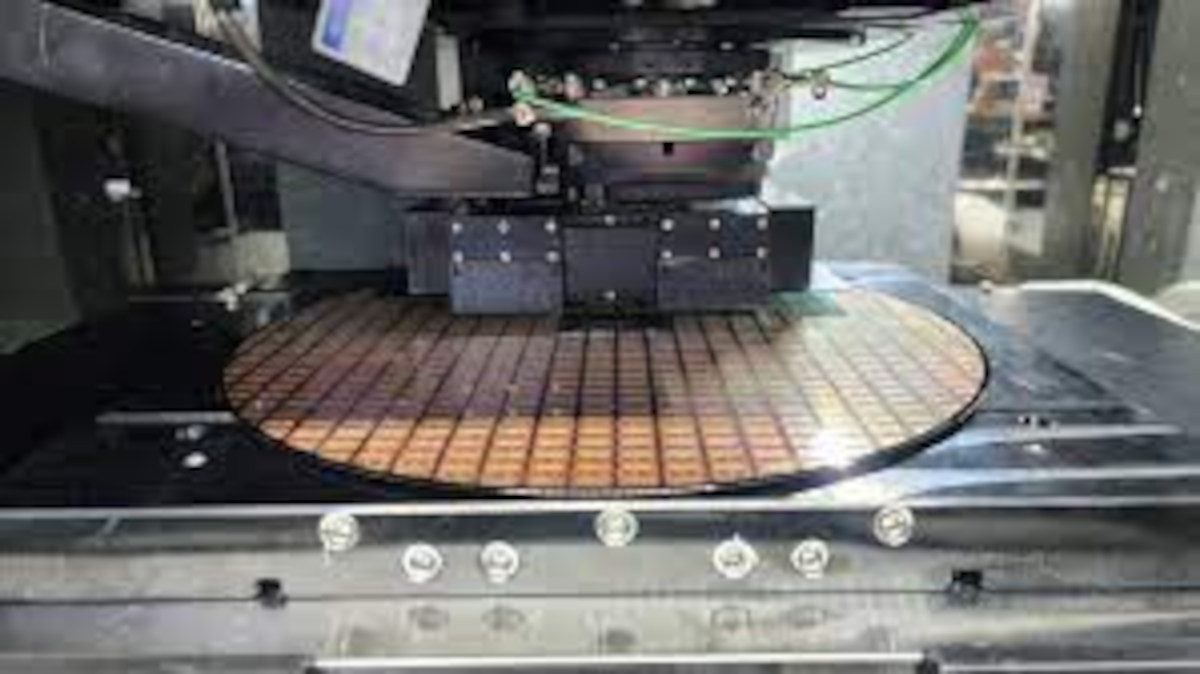
Tianma full-process microLED pilot line and LCD fab, Xiamen

Now Tianma updates that its production line has started to produce standard display panels, in small batches. This is an important step for the company. Tianma says that its first standard product is a 7-inch automotive display. It will be interesting to see whether Tianma can find customers for these low-volume batch production runs.

Read the full story Posted: Aug 24,2025

Yicai Core Light to soon start pilot production of its PeQD-based microLED microdisplays

China-based Yicai Core Light (also known as Yicai Xinguang Technology) says that it is preparing to start producing its microLED microdisplays in the autumn of 2025, in a pilot production line that will be build with help from Ningbo-based Yongjiang Laboratory.

Yicai's microLED platform is based on blue microLEDs and QD color conversion. Interestingly, the company uses perovskite-based quantum dots, saying that these cadmium-free QDs deliver increased performance. Yicai is partnering with application developers including both TCL and Meizu.

Read the full story Posted: Jun 22,2025

JBD managed to dramatically increase its manufacturing quality, increasing yields and reducing defects

China-based MicroLED microdisplay developer Jade Bird Display announced that it has implemented new technologies that enabled it to reduce the average number of defective pixels in its microdisplays from around 100 to around 3 per panel. This increased the company's panel yields quite dramatically.

In addition to the improvement in defective pixels, the company also reduced the rate of its 'dark pixels' (which means pixels with reduced brightness) from around 0.4% a few years ago to only 0.03% today. This, in addition to the company's proprietary demura pixel-level luminance-compensation algorithm has greatly enhanced pixel-brightness uniformity.

Read the full story Posted: May 29,2025

Aledia to start sampling its 3D Nanowire microLED wafers in the second half of 2025

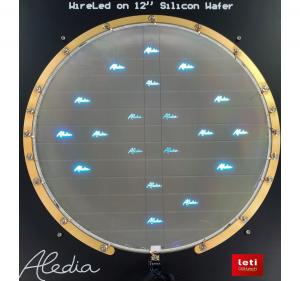
3D Nanowire MicroLED developer Aledia launched its new FlexiNOVA product-ready epiwafer platform, saying that first samples will be available for customers in the second half of 2025, in both 6V and 9V variants.

FlexiNOVA microLED wafers will be offered to display makers to be integrated into full displays, targeting applications such as wearables, automotive displays, TVs and monitors. The FlexiNOVA platform offers high flexibility in chip size, shape, and power usage. 

Read the full story Posted: May 14,2025

Does it make sense for AUO and Innolux to merge to accelerate their microLED development?

Most companies in the display industry believe that microLED is the leading next-generation display technology, that will be able to replace LCDs and OLEDs in many applications. MicroLEDs offers many advantages – both technical such as higher durability and higher brightness and efficiency, but also in unique production processes and models.

The two leading Taiwanese display makers, AUO and Innolux, have been pushing forward aggressively with their microLED projects. This is mainly due to the fact that both companies do not have any real OLED projects, which means that it is easier for them to develop microLEDs as their next-generation technology. MicroLEDs could provide a way for both AUO and Innolux to “leapfrog” over OLED technology.

Against this backdrop, a potential merger between AUO and Innolux presents an intriguing strategic opportunity. By combining their technological expertise, manufacturing capabilities, and financial resources, a merged entity could potentially accelerate microLED development, and perhaps also receiving meaningful financial support from the Taiwanese government, as such as move could strengthen Taiwan's position in the global display industry.

Note that we have no indications that such a merger is even considered by the two companies, but we feel this is a fascinating topic that should be explored and is supported by several strong arguments.

Read the full story Posted: May 10,2025

Innovision starts producing VSP microLED microdisplays at its production line

China-based Innovision, developer of microLED microdisplays based on the company's vertically-stacked pixel (VSP) technology, announced that it has started to produce microdisplays in its production line. 

Innovision started building its production line in March 2024, and soon afterwards the company demonstrated an XGA vertically-stacked full color display, that offers a brightness of over 500,000 nits.

Read the full story Posted: Mar 22,2025

BOE HC Semitek starts mass producing microLED wafers, updates on its latest products and technologies

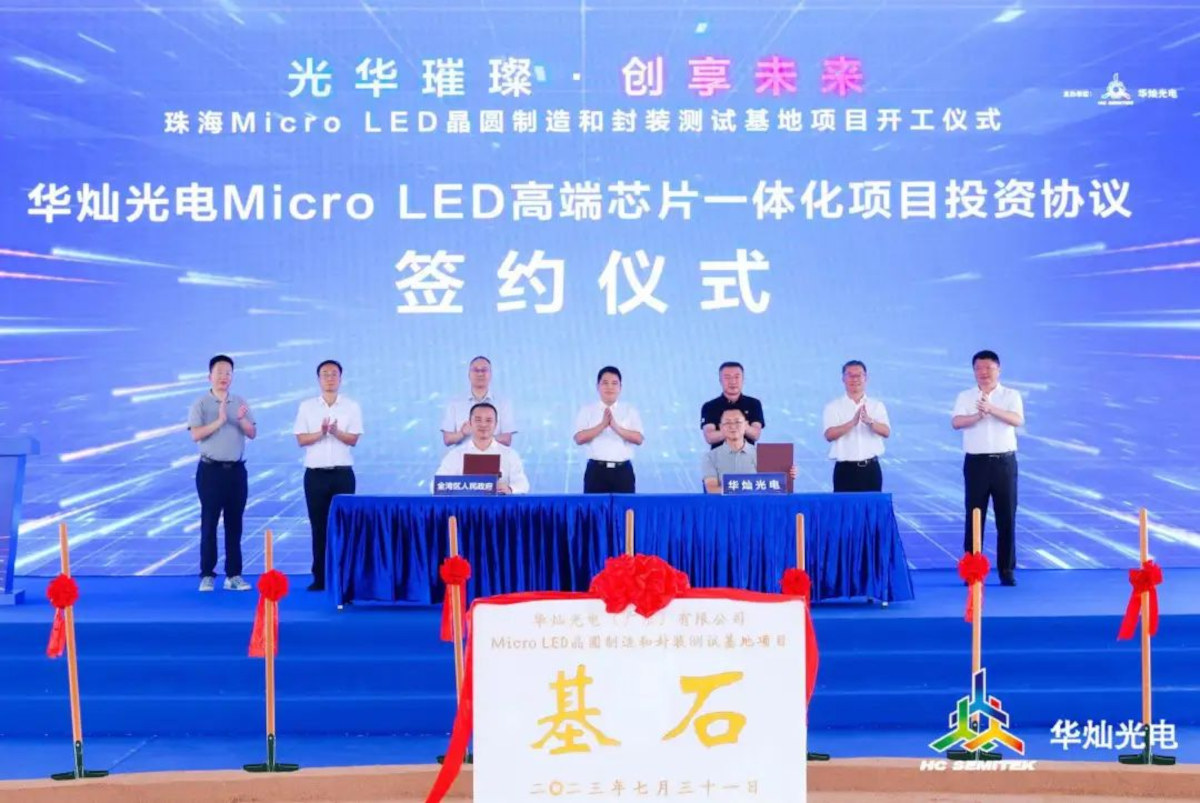
In August 2023, China-based BOE HC Semitek started building its $700 million microLED epiwafer production line in Jinwan District, Zhuhai, China. In October 2024, the company announced that it started producing sample wafers.

A few days ago the company held a ceremony as it is starting to mass produce 6-inch microLED wafers, as the project enters its commercial stage. BOE now has a full microLED industry chain, from epiwafers to modules and applications.

Read the full story Posted: Mar 22,2025

A spotlight on the Fraunhofer IZM: a MicroLED Industry Association member

We're happy to introduce the Fraunhofer IZM, a research institute that is a part of the Fraunhofer-Gesellschaft, that specializes in applied and industrial research in packaging technologies and integrating multifunctional electronics into systems. With over 400 employees across four departments, it provides expertise in microelectronics packaging from concept to reliability.

The Fraunhofer IZM's microLED project is led by Dr. Oppermann, IZM’s Deputy Head of Department and Dr. Manier, R&D project engineer. Dr. Opperman has led the "Fine Pitch Assembly and Interconnects" group at Fraunhofer IZM since 1999, focusing on flip chip, die attach, and wafer-level packaging for MEMS, RF, opto, and power applications. His innovations include AuSn soldering, transient liquid phase bonding, nanometal bonding, and Indium bonding. Dr. Manier has contributed to flip chip and die bonding technologies in MEMS, power electronics, and medical applications. He has been involved in European and industry projects, including chip-to-chip/substrate bonding and vacuum-tight MEMS sealing.

Dr. Oppermann and Dr. Manier recently finalized a techblick feasibility study into microLED massive parallel assembly and interconnection.

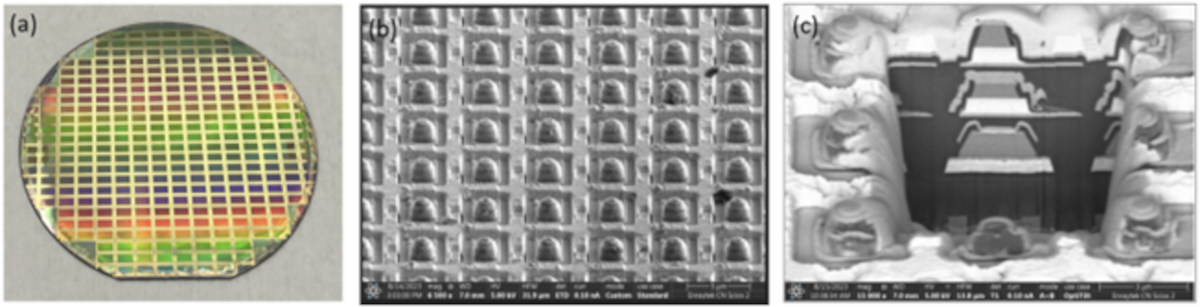
Fig 1. SEM imaging of assembled micro-display of Figure 1 with 3 different small die (RGB) soldered on target substrate

Read the full story Posted: Mar 04,2025

San'an increases its production capacity as demand for its microLED chips is strong

China-based San'an Optoelectronics is experiencing increased demand for its microLED wafers, and the company is expanding its production capacity. San'an currently has the capacity to produce 250 6" microLED wafers per month, and by the end of the quarter, it will be increase its capacity to 1,400 monthly wafers.

San'an also has passed Samsung's audit and microLED validation tests for its latest chips, and the company is now entering into Samsung's supply chain for the company's large-area tiled Wall microLED TVs. 

Read the full story Posted: Jan 23,2025