Production equipment

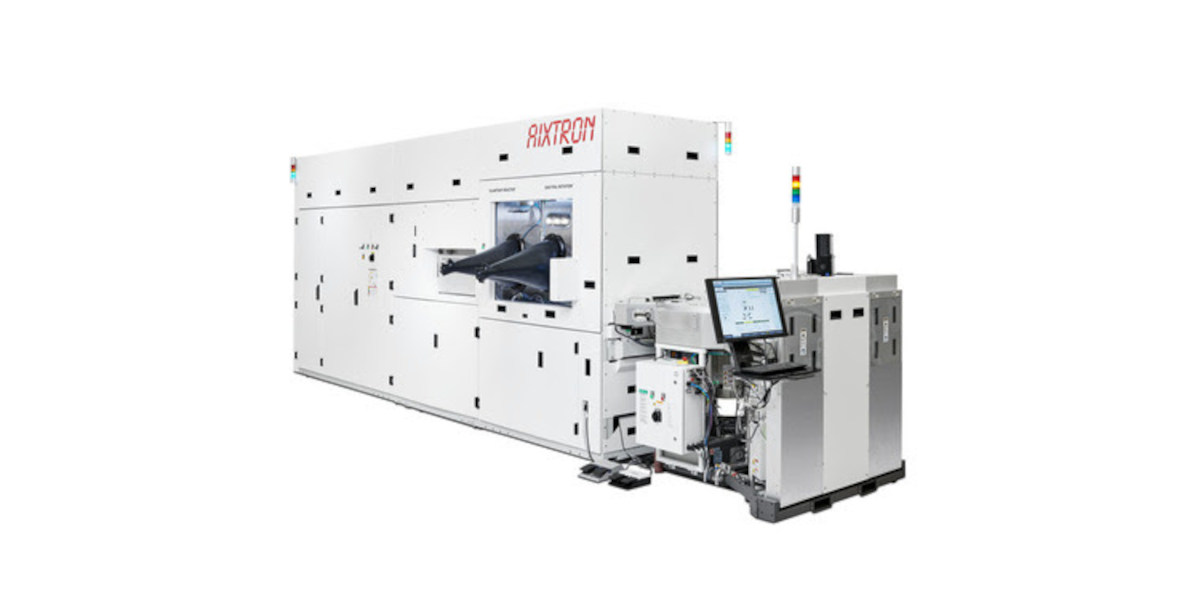
US-based company is selling off a new 200 mm Veeco Propel MOCVD microLED system and related epitaxy equipment

An East-Coast U.S. company is selling off a set of MOCVD microLED R&D and production equipment, including a 200 mm Veeco Propel GaN MOCVD system, along with a full complement of metrology, test and facilities equipment. The seller has asked MicroLED-Info to help locate buyers, and we are happy to connect interested companies directly with the seller.

This is a notable opportunity. Veeco's Propel platform is the single-wafer GaN MOCVD line built on Veeco's TurboDisc reactor design. Tools of this type rarely reach the secondary market, and several of the items here are brand new and unused.

The equipment falls into two groups: the Veeco MOCVD system, and a set of supporting metrology, test and facilities equipment that is being parted out as individual items.

Read the full story Posted: Jun 19,2026

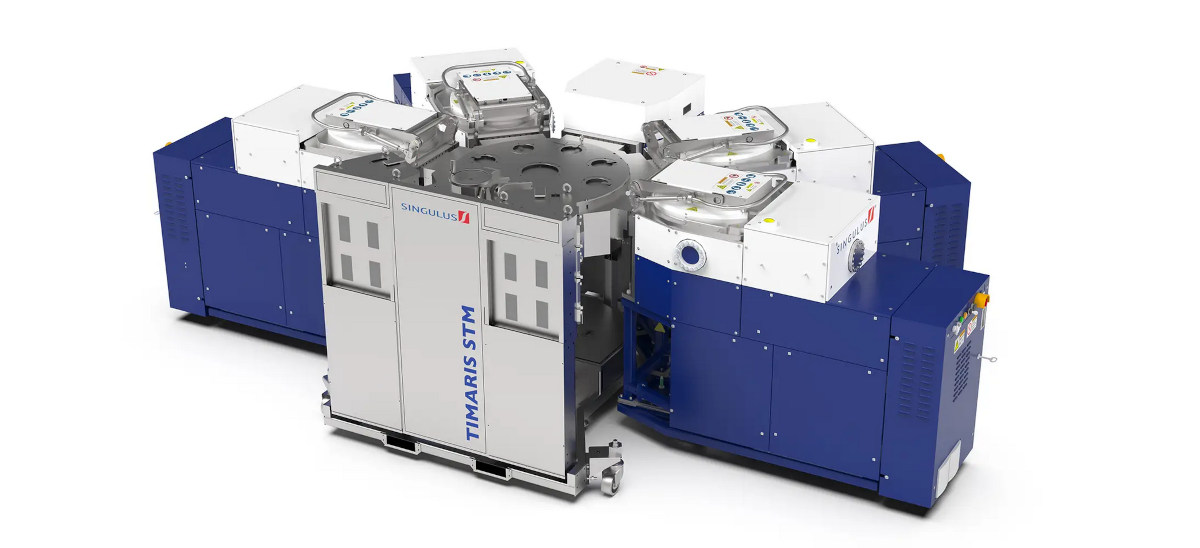
Singulus announces a new order for its Timaris microLED deposition system

Germany-based Singulus Technologies announced that it has received a new order for its Timaris microLED deposition system. Following the commissioning of a first system of this type by the customer, the company is now expanding its existing US production capacities.

In April 2024, Singulus announced that it has adapted its modular high-vacuum sputtering TIMARIS STM system for microLED production, with the first TIMARIS STM microLED system already been sold and delivered.The TIMARIS platform has a modular structure and can be equipped with various process and add-on modules for a wide range of requirements. 

Read the full story Posted: Jan 20,2026

A spotlight on Aledia: a MicroLED Industry Association member

We're happy to interview Pierre Tchoulfian, CTO of Aledia, as part of our series of interviews with MicroLED Industry Association members. France based Aledia, leading the next-generation displays with its 3D silicon nanowire–based microLED technology, designed to dramatically lower production costs. Backed by over €360 million in funding, Aledia is expanding production with its FlexiNOVA epiwafer platform and a planned €140 million fab. With more than 250 patent families, the company is advancing both large-display and next-generation AR microLED platforms.

Pierre is a recognized MicroLED innovator with 14+ years advancing technology and product development, shaping next-generation display solutions with over 10 patents and numerous publications.

Can you introduce your company and technology?

Aledia is a deep-tech company at the forefront of display innovation, focused on redefining what’s possible with microLED technology. We were founded in 2011 out of CEA-Leti research labs and are headquartered in Grenoble, in the heart of Europe’s “Display Valley.”

Read the full story Posted: Oct 18,2025

Revolutionizing High-Volume Production: The Intlvac Icarus Indium Solder Bump Deposition System

This is a sponsored post by Inltvac

In the fast-paced world of advanced manufacturing, precision, speed, and reliability are non-negotiable. Enter the Intlvac Icarus Indium Solder Bump Deposition System—a game-changing solution designed to meet the rigorous demands of high-volume production. With over 30 years of expertise in system manufacturing and coating services, Intlvac has engineered a system that delivers exceptional performance, minimal maintenance, and rapid turnaround times.

A solder bump is a small, raised deposit of indium solder that is typically applied to the surface of a microelectronic device. Solder bumps are commonly used in semiconductor packaging and flip-chip bonding processes, microprocessors, integrated circuits, and other electronic components. They provide an efficient and reliable method for connecting chips to substrates, allowing for high-performance and compact devices.

We are Exhibiting! Visit our booth at the MicroLED Connect & AR/VR Connect in Eindhoven on 24-25 September 2025

Read the full story Posted: Aug 19,2025

Beneq says it is seeing significant progress in the microLED industry, with repeat orders for its ALD systems

Beneq announced that it is seeing significant progress in the microLED display market, and has received repeat orders from microLED technology developers. 

The company says that its top-tier customers rely on ALD technology to advance monolithic integration of microLEDs and driver electronics on a single chip - likely they mean microLEDs microdisplays for AR applications.

Read the full story Posted: Jul 14,2025

XTPL Installs Delta Printing System at UMass Lowell to Advance Printed Electronics Research

XTPL S.A. Announces Sale and Installation of Delta Printing System to the University of Massachusetts Lowell for Advanced Research at the Raytheon UMass Lowell Research Institute (RURI) and the Printed Electronics Research Collaborative (PERC)

Boston, MA, June 9, 2025 — XTPL S.A., a global leader in high-precision additive manufacturing technology, is pleased to announce the sale and successful installation of its Delta Printing System (DPS) at the University of Massachusetts Lowell. The system will support advanced research at the university’s Raytheon UMass Lowell Research Institute (RURI) and the Printed Electronics Research Collaborative (PERC).

The XTPL DPS, renowned for its submicron precision and versatility, will play a critical role in developing next-generation printed electronics, sensors, and functional materials. The collaboration strengthens XTPL’s presence in the U.S. research ecosystem and highlights the growing demand for innovative fabrication tools.

Read the full story Posted: Jun 23,2025

JBD managed to dramatically increase its manufacturing quality, increasing yields and reducing defects

China-based MicroLED microdisplay developer Jade Bird Display announced that it has implemented new technologies that enabled it to reduce the average number of defective pixels in its microdisplays from around 100 to around 3 per panel. This increased the company's panel yields quite dramatically.

In addition to the improvement in defective pixels, the company also reduced the rate of its 'dark pixels' (which means pixels with reduced brightness) from around 0.4% a few years ago to only 0.03% today. This, in addition to the company's proprietary demura pixel-level luminance-compensation algorithm has greatly enhanced pixel-brightness uniformity.

Read the full story Posted: May 29,2025