Brightness

LG Display shows new 22-inch zero-bezel microLED modules

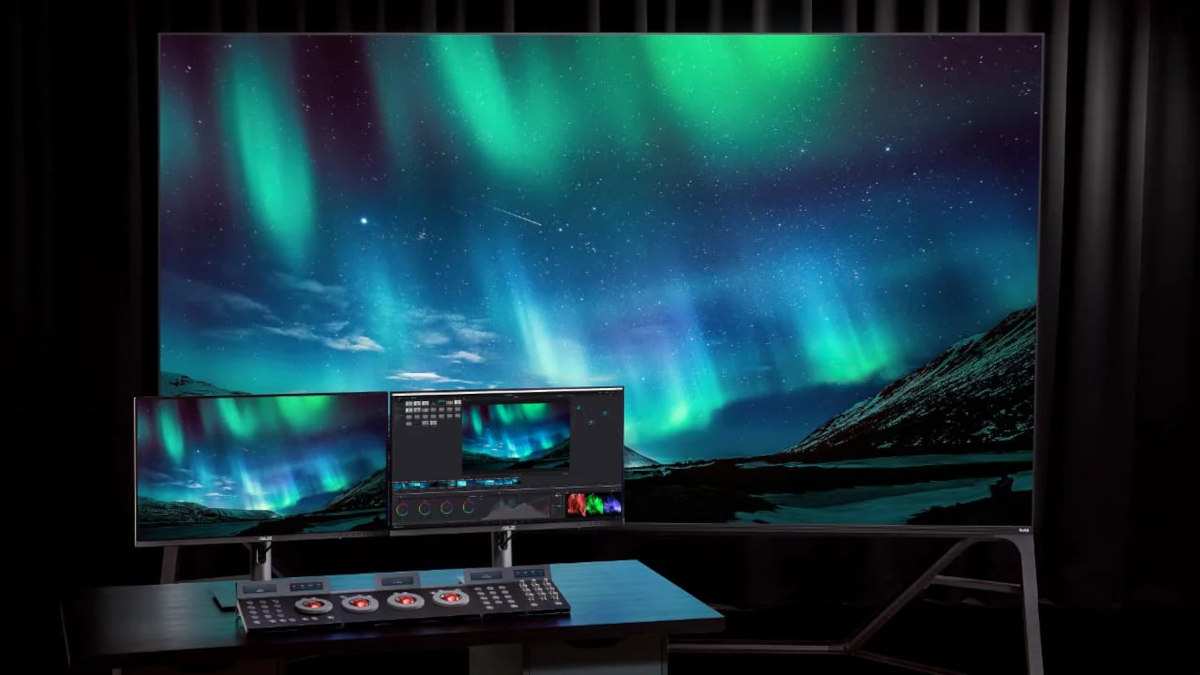
LG Display is demonstrating new microLED modules at SID Displayweek 2025. These are tiled zero-bezel displays, that the company is showing in a nice demo:

Each module is 22" in size, offering a resolution of 480x540 (pixel pitch - 0.783 mm), a refresh rate of up to 144Hz (VRR), and a peak brightness of 1,700 nits (3% APL). 

Read the full story Posted: May 14,2025

VueReal expands its reference design kits into specific automotive and consumer electronics applications

In January 2025, microLED developer VueReal launched reference design kits (RDKs) to enable product designers to buy microLED display samples and integrate into new designs. There were three different kits: monochrome microLED lighting panels, microLED microdisplays, and passive matrix and active matrix (LTPS) transparent microLED displays, ranging in size from 3.5-inch to 10-inch.

Now VueReal announced that it is expanding its RDK portfolio, with new industry-specific bundles (what they refer to as vertical RDKs). These new kits are specifically built for automotive and consumer electronics.

Read the full story Posted: Apr 30,2025

Tianma doubles the brightness of its 8" 167PPI HUD microLED display to 10,000 nits

In Displayweek 2024, Tianma demonstrates several microLED prototypes, including a 7.6" 167 PPI (1204x398) 5,000 nits microLED display based HUD. The display was first developed in 2023.

Tianma now announced that it has developed a second generation HUD display, that achieves double the brightness (10,000 nits). The company refers to this display as the 8 MicroLED IRIS HUD display. Tianma also said that the new display offers a "refined and compact design that provides greater flexibility for automotive interior integration", and it also boasts "significantly enhanced image quality, featuring more vibrant colors and richer details".

Read the full story Posted: Mar 20,2025

Hongshi Intelligence developed a 1.2 million nits full-color microLED microdisplay

China-based microLED microdisplay developer Hongshi Intelligence announced that it has developed a full-color microLED microdisplay, with a brightness level of 1.2 million nits(white light).

The microdisplay uses a hybrid stack structure, integrating native blue and green microLED (from two source wafers) and uses quantum dots color conversion to emit red light from blue LEDs.

Read the full story Posted: Mar 15,2025

JBD developed a 2 million nits full-color microLED microdisplay, to start production in Q3 2025

China-based MicroLED microdisplay developer Jade Bird Display have developed a full-color microLED microdisplay that achieves a brightness of 2 million nits (white-balanced).

JBD says that its Phoenix series RGB microdisplays offer a pixel pitch of 5 micron, an ultra-thin stack of less than 5 micron, native RGB emitters and high color fidelity. JBD hopes to commercialize its full color microdisplays in Q3 2025. 

Read the full story Posted: Dec 22,2024

Researchers develop high uniformity epiwafers leading to 10 million nits green microLEDs

Researchers from Hunan University have designed and grown wafer-scale uniform green GaN epilayer on silicon wafers (4-inch and 6-inch in size). The epilayer was of very high uniformity and showed excellent properties. Using this wafer, the researchers developed green microLED displays reaching over 10 million nits.

This epilayer demonstrated a low dislocation density of 5.25×108 cm-2, minimal wafer bowing of 16.7 μm, and high wavelength uniformity (STDEV<1 nm). The researcher integrated the Micro-LEDs with CMOS circuits and created 1080x780 monochrome green microLED displays, which offered the ultra high brightness.

Read the full story Posted: Oct 21,2024

Raysolve demonstrates a 0.13" 320x240 full-color 250,000 nits microLED microdisplay

Hong Kong based microLED microdisplay developer Raysolve Technology announced a new microdisplay product line, branded as PowerMatch 1. These are 0.13" 320x240 full-color microLED microdisplays, that achieve a high brightness of 250,000 nits (up from 150,000 nits in the company's previous panels). The company is using blue LEDs with quantum dots (QD) color conversion.

The company says that it managed to increase the brightness compared to its previous panels by optimizing both the GaN blue material and the quantum dots conversion materials, in addition to updates to the manufacturing process and the CMOS driver. The new displays achieve the same color performance of their predecessors (108.5% DCI-P3).

Read the full story Posted: Oct 10,2024

AUO shows its latest microLED displays at Displayweek 2024

AUO had an impressive booth at Displayweek, showing some of its latest microLED prototypes. It is clear that the company is highly focused on microLED technology as its next-gen display strategy.

First up, with a 31" large area single-panel microLED, which AUO says is the world's largest. The display is produced on a single glass LTPS backplane, and offers 120Hz and a brightness of 500 nits. AUO calls this a Large Size A.R.T. MicroLED display.

Read the full story Posted: May 26,2024

BOE shows a new microLED display prototype at SID Displayweek 2024

BOE had a large demonstrating at SID Displayweek 2024, showing several of its latest displays and prototypes - including many flexible and foldable OLED displays, automotive AMOLEDs, new OLED technology demonstrators and two OLED microdisplays.

BOE also showed a microLED display demonstrator, which it called the MicroLED Transformer Display, that included two panels that can connect in an almost seamless way (but not completely). The displays are flexible (curved) with a 0.3 mm pitch display (P0.3). Other specifications include a brightness of up to 2,000 nits (peak), and a refresh rate of 90Hz. 

Read the full story Posted: May 24,2024

Saphlux developed a 0.39" full-color microLED microdisplay using its NPQD color conversion technology

US-based Saphlux has developed a 0.39" full-color microLED Microdisplay, based on the company's NPQD color conversion technology. You can see a sample of Saphlux's T1-0.39 RGB display in the video below. 

Saphlux's first microdisplay offers a maximum white brightness of 250,000 nits, and a wide color gamut. The company is using high-EQE blue microLEDs (it has a partner that supplies the LEDs) and its NPQD technology achieves 67% photon conversion efficiency. The company's technology enables a pixel pitch of sub-2 microns. 

Read the full story Posted: Aug 18,2023