VR / AR - Page 2

Syntec Optics to develop microLED optical components for the US army

US-based Syntec Optics Holdings announced that it received a new order from the US army to manufacture advanced optical components that will enable AR displays based on microLED imaging.

The company says that it will develop lightweight, high-clarity optics to support XR prototypes designed for modern warfare. The optics will enable microLED imaging through a visor.

Read the full story Posted: Dec 27,2025

Yole sees the microLED market grow to $5 billion in revenue by 2032, driven by AR, automotive and TV applications

Yole Group has updated its microLED market forecasts, saying that the industry is now at a critical phase, as both wearable and automotive microLED displays are entering low-level production (at AUO's 4.5-Gen line), it has to be seen whether producers can achieve high yields and manufacturability, and reduce costs going forward.

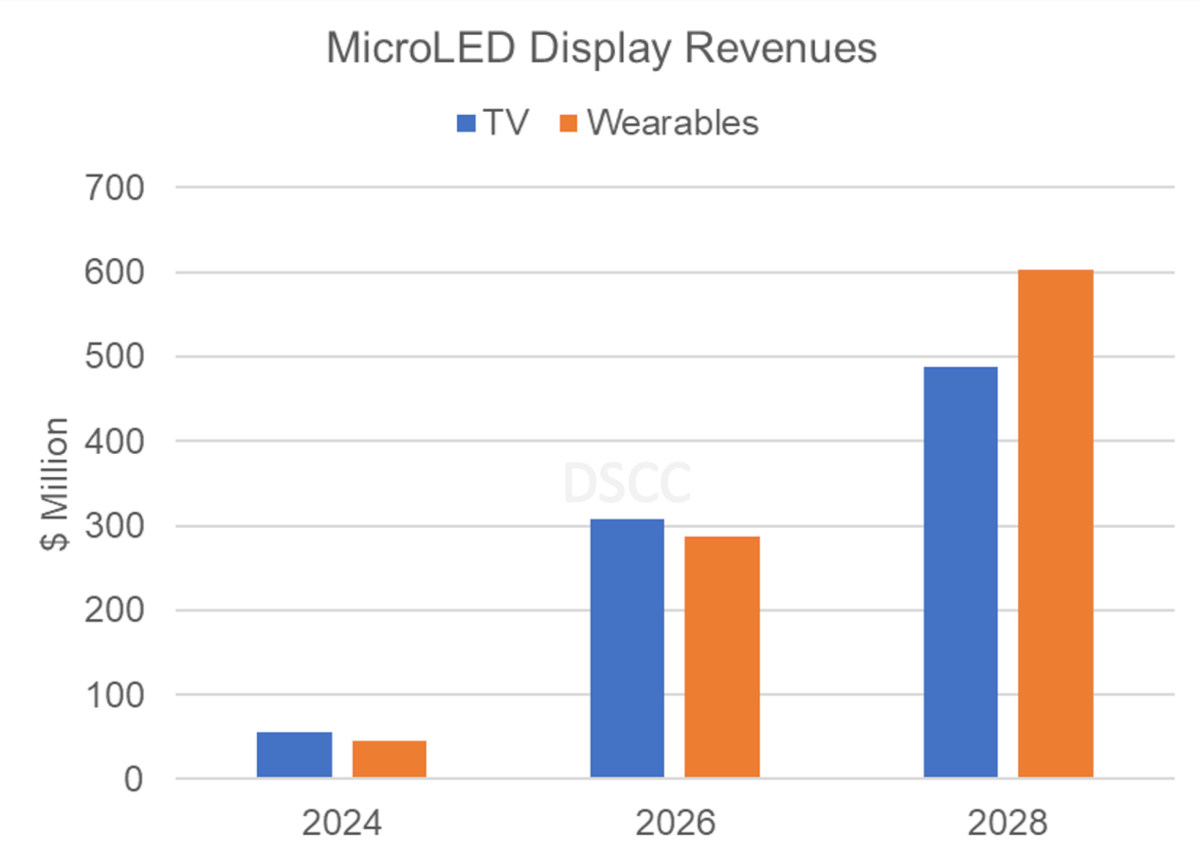
As you can see above, Yole believes that actual meaningful volumes will begin only in 2027-2028, and the market will grow to reach almost $5 billion in revenue (at the panel level) by 2032. Most of the revenue will come from microdisplays (for AR/VR), luxury TVs, and automotive displays.

Read the full story Posted: Dec 25,2025

Sapien Semiconductors to provide backplane designs for a global microdisplay solutions company

Korea-based microLED backplane developer Sapien Semiconductors announced that it has signed a $3.7 million contract with a global microdisplay solutions company for the development and supply of CMOS microLED backplane products. It appears as if this contract is just a first step in a strategic collaboration agreement that was decided with this company.

As you can see above, Sapien shared their supply chain view, where Sapien provides the microLED CMOS backplane, and then its partner provides the frontplane (microLED) deposition and finally an OEM integrates the display engine in an AR product.

Read the full story Posted: Dec 25,2025

JBD introduces a new full-color microLED projector module, the Roadrunner I, with increased performance and reduced size

China-based microLED microdisplay developer JBD launched a new color projector module, branded as Roadrunner I. The company says that this new product achieves smaller pixel size and increased optical efficiency compared to its earlier generation products, translating into a substantial advantage in overall form factor and image performance for full-color AR smart glasses.

The Roadrunner I projector utilizes JBD's latest 10,160 PPI (2.5 um pitch) Hummingbird monochrome microLED microdisplay, that JBD announced two months ago. The display module offers a 25-degrees field of view (FOV) and achieves an angular resolution of up to 32 pixels per degree (PPD), delivering an increase of over 20% relative to previous products from JBD. The Roadrunner I can operate at 480 Hz, an ultra-high refresh rate. 

Read the full story Posted: Dec 22,2025

Google to launch monocular microLED-powered AI AR glasses in 2026

According to reports, Google is planning to release two new AI AR glasses in 2026, one model without a display, and the second one offering a monocular microLED-powered display.

Magic-Leap AI AR glasses prototype, developed with Raxium/Google

According to the information available, Google is aiming at a simple, minimalistic device, that will be able to provide notifications, small information displays, and provide functionality similar to a smart watch. The company plans to later (perhaps in 2027) release a binocular version.

Read the full story Posted: Dec 20,2025

ITRI and PlayNitride collaborate to design new high-performance full-color AR smart glasses

Taiwan's ITRI announced that together with PlayNitride and ChaseWind, it has developed Taiwan's first full-color high-res microLED AI smart glasses.

The smart glasses utilize PlayNitride's 0.49-inch FHD (1920x1080, 4536 PPI) 3,000 nits single-chip full color MicroLED microdisplay. According to ITRI, these glasses offer "six times the image detail and five to ten times the brightness" of current commercial products which are based on LCoS or OLED displays.

Read the full story Posted: Dec 14,2025

Meta reportedly aims to release a microLED AR glasses device by end of 2027

Reports from Korea suggests that Meta is in designing a new AR glasses product, that will be based on microLED panels, replacing the currently-used LCoS displays in the first-generation Meta Ray-Ban Display.

Meta's First-Gen Ray Ban Display, LCoS based

Meta is aiming to release the microLED based AR headset towards the end of 2027. The reports suggest that Meta will utilize microLED backplanes produced at GlobalFoundries.

Read the full story Posted: Dec 12,2025

One week to go—join us online at the MicroLED and AR Innovation Day 2025!

Next week, on December 11, MicroLED Innovation Day 2025, our free virtual event will take place. Don’t miss your chance to join the the industry's leading innovators and experts from across the the microLED display industry, in addition to the AR/VR industries. This event is the perfect opportunity to stay updated on the latest breakthroughs, network with global professionals, and explore collaboration opportunities—all from the comfort of your home or office.​

You can see the agenda above (the MicroLED and ARVR sections are on Track 3) - it features presentations from pioneering companies covering the full spectrum of the microLED and AR/VR ecosystems: materials, processes, manufacturing tools, and end applications. Attendees will gain first-hand insights into the innovations driving microLED and AR applications, making this a must-attend event for anyone interested in the future of microLED technology, and the future of AR and VR light engines.​

Read the full story Posted: Dec 04,2025

Cellid introduces two new microLED-powered AR glasses reference designs

AR waveguide developer Cellid announced two new AR headset reference designs (verification models), to promote the company's latest waveguide and full display modules. 

Both reference designs are based on microLED displays. The first is an entry-level model, that uses a monochrome (green) 640x480 60Hz 3000 nits microLED display, an Alif E7 chipset, and the company's own latest plastic waveguide.

Read the full story Posted: Dec 03,2025